
Aldborough Roman Site
Aldborough Roman Site and Its Remarkable Collection
The Aldborough Roman Site, located near Boroughbridge in North Yorkshire, was once a thriving Roman town covering around 22.3 hectares. Known in Roman times as Isurium Brigantum, it was an important administrative and military centre. The town featured a classic Roman layout with streets crossing at right angles and was surrounded by strong defensive walls, later renovated in the 4th century AD.
Although much of the ancient city now lies beneath modern Aldborough, archaeological discoveries have revealed fascinating insights into Roman urban life. In 1770, excavations uncovered the remains of an 82-metre-long wall, possibly part of a grand forum at the city’s heart. To the west, near the city wall, archaeologists discovered the remains of a Roman bathhouse, though it remains uncertain whether it served a private villa, a public facility, or a mansio (a Roman inn for travellers).
Excavations across the site have also revealed luxurious residential buildings featuring intricate mosaics and hypocaust heating systems, evidence of a sophisticated lifestyle among its inhabitants. Beyond the city walls, a 2.7 x 1.8-metre basin was discovered to the north, with similar structures near the east and west gates — possibly linked to water management or ritual use.
Today, visitors can explore the Aldborough Roman Site and view its mosaic floors, artefacts, and exhibits that bring the story of Roman Britain vividly to life.
Aldborough Roman Site – Opening Hours, Admission & Visitor Information
Opening Hours
-
Monday: Closed
-
Tuesday: Closed
-
Wednesday: Closed
-
Thursday: Closed
-
Friday: Closed
-
Saturday: 10:00 AM – 6:00 PM
-
Sunday: 10:00 AM – 6:00 PM
Please note that opening times may vary seasonally. Before planning your visit, check the official English Heritage website for the most up-to-date information, including special events, last admissions, and weather-related closures.
Admission Prices
-
Adults: £5.00
-
Children (aged 5–17): £2.70
-
Concessions: £5.00
-
Family Ticket (1 adult + up to 3 children): £9.00
-
Family Ticket (2 adults + up to 3 children): £14.90
English Heritage members enjoy free entry. Group bookings and discounted rates may also be available — please refer to the English Heritage website for full ticket details.
Facilities
Information about on-site facilities at the Aldborough Roman Site is currently limited. Visitors are encouraged to check the English Heritage website before travelling for updates on parking, toilet access, wheelchair accessibility, and visitor amenities.
Tickets are free for Members, but you can still choose to book if you’d like. Please remember to bring your English Heritage membership card with you. If you’ve lost it or forgotten it, call Customer Services on 0370 333 1181 (Monday to Saturday).
.
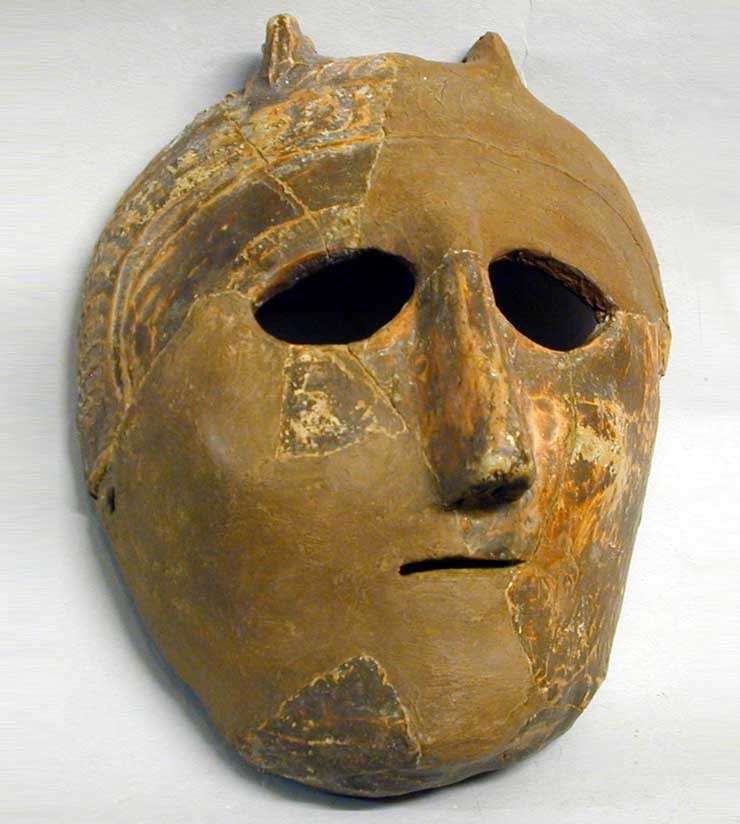
In AD 57 Cartimandua split from her husband, driving Venutius to wage a war against her. Although Cartimandua had the support of the Romans, Venutius took advantage of Roman instability in AD 69 and eventually took over as ruler of the Brigantes. With the Brigantes now under the leadership of Venutius and his anti-Roman supporters, the Roman invasion of the north began.
READ MORE ON CARTIMANDUA
Thriving Under Roman Rule
Archaeological excavations at the Aldborough Roman Site have revealed fascinating insights into the development of Isurium Brigantum—once a thriving Roman town in North Yorkshire. Established as an important administrative and commercial centre, the town flourished under Roman rule, reflecting both its strategic importance and economic prosperity.
By the late 2nd century AD, Isurium was fortified with substantial stone walls, signifying its elevated status within Roman Britain. Over time, the settlement expanded beyond its original boundaries, a clear sign of growth and success. During the 4th century, the town’s defences were further strengthened with projecting towers and outer ditches, not only enhancing its imposing appearance but also reflecting a period of social and political instability that required greater protection for its inhabitants and trade routes.
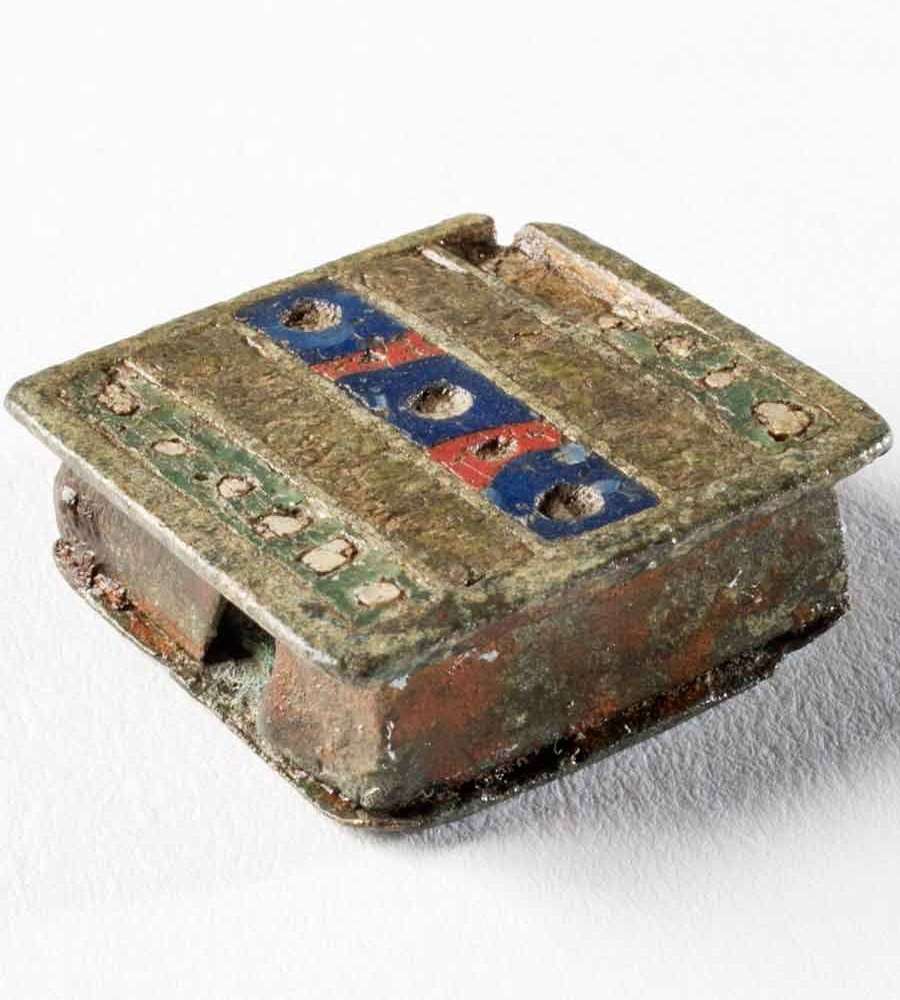
The discovery of intricate mosaic floors in domestic buildings highlights the luxury and sophistication enjoyed by the town’s wealthy elite. Artefacts such as fine ceramics, glassware, pottery fragments, brooches, jewellery, and items linked to the Roman military reveal a community that was prosperous, well-connected, and deeply integrated into the broader economy of Roman Britain. Together, these finds illustrate a vibrant urban centre where commerce, culture, and craftsmanship flourished under the enduring influence of Rome.
EXPLORE THE ALDBOROUGH COLLECTION

THE HELICON MOSAIC
Aldborough has one of the largest numbers of mosaics of any town in Roman Britain with 22 recorded, largely from the south-western quarter of the site. Most of these would have adorned large town houses and are dominated by abstract geometric designs, made with small cubes of material (tesserae).
One of the finest among them is the Helicon mosaic, which comes from an apsidal room excavated in the 19th century. This very fine pavement dates to the early 4th century AD and includes an unusual Greek inscription in blue glass tesserae. It would have formed the floor of an apse at one end of a dining room, in a position allowing the principal guests to view and admire it from their seats or couches, while eating and talking.
The depiction of the muses in the Helicon mosaic suggests that the people of Isurium were well versed in Greek mythology and had tastes influenced by the wider empire.
ALDBOROUGH AFTER THE ROMANS
The fate of Isurium after the collapse of Roman power in the 5th century is a mystery. It is likely that the walled area remained in some use. Archaeological and documentary evidence suggests it remained an important settlement through the Anglo-Saxon period and by the time of the Domesday survey (1086) it was recorded as a major centre with large landholdings. A church was built in the courtyard of the Roman forum, probably before the Norman Conquest, suggesting that parts of the Roman town still stood.
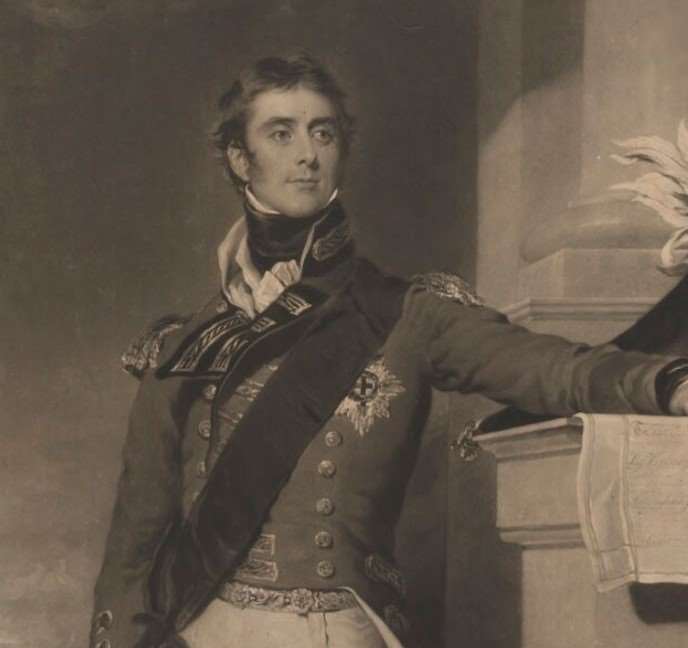
In the medieval period Aldborough was a ‘borough by prescription’ and from 1558 it returned two Members of Parliament. Aldborough would become a valued possession of successive Dukes of Newcastle, who ensured that it remained a ‘pocket borough’ until the Great Reform Act of 1832. The interest in restricting the size of the village was almost certainly for the Dukes’ own political influence. However, it also meant the area escaped any large-scale development and ensured the survival of the Roman town.
EXCAVATION AND DISCOVERY
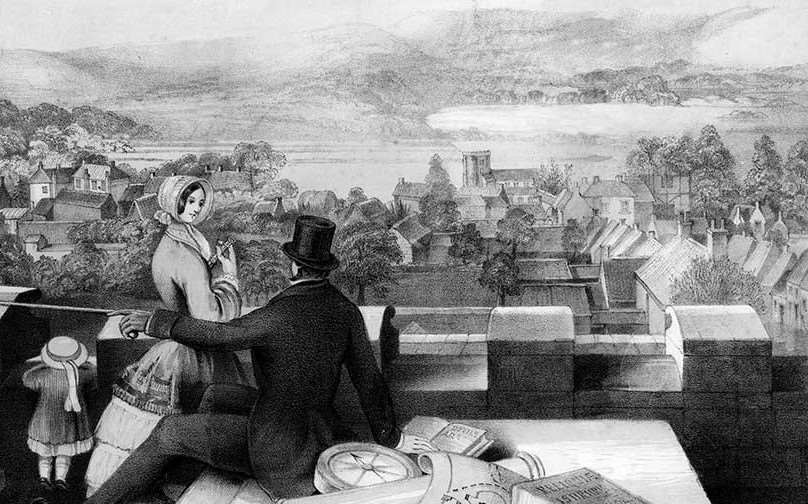
Aldborough’s Roman past has been explored through different periods of excavation and discovery. The 18th century saw two major finds: first, the discovery of a series of mosaics in the centre of the village; and second, uncovering the extensive remains of walls in 1770, which formed part of the town’s Roman forum.
However, it was not until the 19th century that the historic value of Aldborough was more fully recognised. Andrew Lawson, who purchased Aldborough manor in 1834 from the 4th Duke of Newcastle, encouraged further exploration of the Roman town.
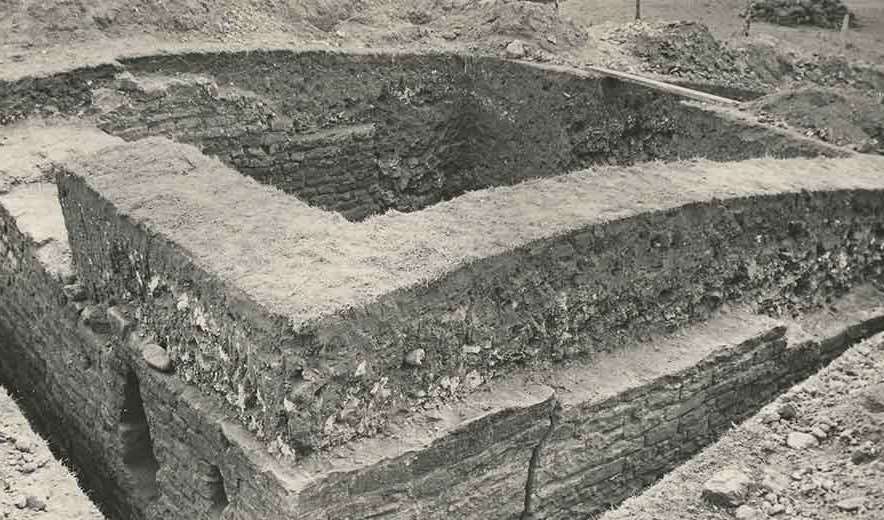
Lawson excavated a series of buildings in the manor grounds which led to a considerable collection of Roman artefacts. He also erected buildings to protect some of the mosaics and set up a museum for displaying the archaeological finds, which opened in 1863. The museum, along with the area which makes up the English Heritage site today, was given to the State in the 1950s by his great-granddaughter Lady Lawson-Tancred.
After Lawson’s excavations in the 1830s and 40s there was comparatively little digging on the site until after the First World War. Since then, there have been various periods of excavation and surveying on the site, each contributing to a greater understanding of the town today.
Aldborough Roman Site
ALDBOROUGH TODAY
Aldborough is now the focus of a thriving research and community programme. In 2009 the Aldborough Roman Town Project (University of Cambridge) was established to better understand the development of Isurium and its role in the Roman north. A synthesis of all previous work has been created, drawing together evidence from antiquarians and archives.
The project has used newly available technologies to map the landscape above and below ground. Using a combination of geophysical survey techniques, detailed plots have been made of features below the ground, revealing streets lined with town houses, temples and public buildings. The walls of the forum have been discovered beneath the churchyard. Beyond the walls, the amphitheatre is visible with its curved seating.
The project team began excavations in 2016, mainly reinvestigating previous excavations. Their work has included the digging of a narrow trench to discover the precise orientation of the forum; excavating part of a large warehouse first discovered in 1924; and unearthing an area of Roman workshops, including a blacksmith’s workshop.
Work continues to make sense of the origins and endings of the town, and understand more about those who lived here.
Photogrammetry has been used to record excavations, objects and structures at Aldborough, and also to assess rates of change for conservation. Explore some of the 3D models below, created by Professor Dominic Powlesland.
Aldborough Roman Site
